AI Is Reshaping Accountancy Graduate Jobs in the UK: Exposure, Advisory, and What Firms Do Next
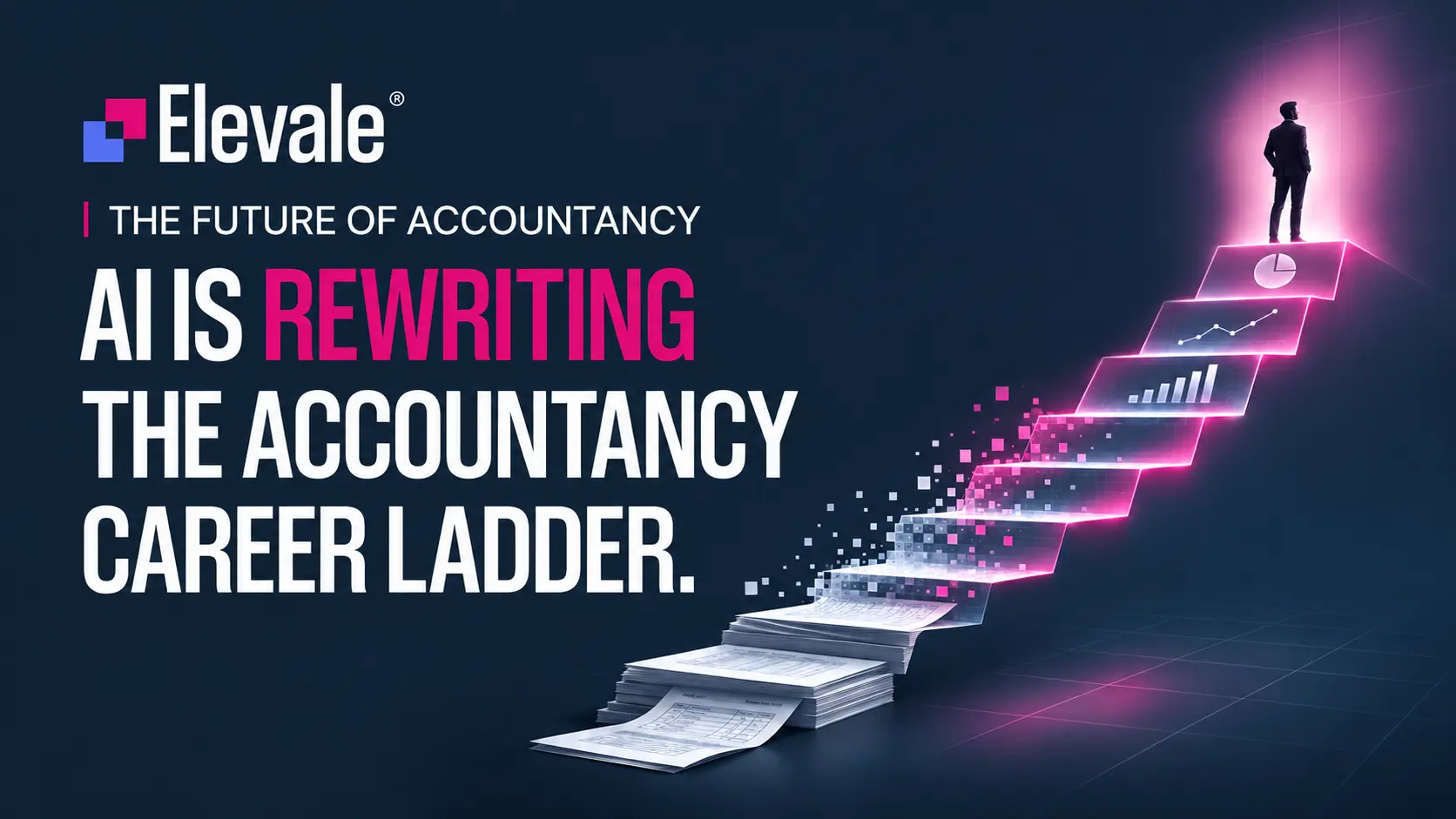
AI is reshaping accountancy graduate jobs in the UK in a specific way: the first tasks a trainee used to learn on (coding, reconciliations, first-draft commentary, checklist compliance) are among the most exposed to automation. That does not mean the profession disappears. It means the entry path, the skills you hire for, and the work clients pay for are moving toward augmented judgement and packaged advisory.
This article connects three layers: what government labour research says about exposure (with UK sources first), what international data adds about cognitive desk jobs, and what UK practices are already doing with recovered capacity. If you lead hiring, training, or commercial strategy, the question is not whether AI touches graduate roles. It is whether your firm trains people into advisory delivery or into a production line that software is compressing.
Why graduate accountancy roles sit in the AI exposure band
Graduate accountancy has always been a ladder of repeatable desk work. Juniors learn the ledger, chase queries, build working papers, and draft variance notes a senior rewrites. Large language models and embedded practice tools now shorten that ladder. The tasks are cognitive, structured, and document-heavy: exactly the profile labour researchers flag as high exposure.
The UK Department for Education's Impact of AI on UK jobs and training (November 2023) ranks chartered and certified accountants third among occupations most exposed to AI, behind management consultants and financial managers. Finance and insurance is the sector with the highest exposure overall. Professional occupations at degree level sit above the UK average because the work mixes analysis with clerical production.
For partners, AI reshaping accountancy graduate jobs UK is not an abstract graduate-market headline. It is the Monday timesheet: fewer hours on pure production, more pressure to show what a qualified person adds when the draft already exists. The government's October 2026 Professional and Business Services Jobs Plan still forecasts growth in accountants and related roles, but expects them to adapt to greater use of technology to increase productivity. That plan also notes that skill requirements in junior roles most exposed to AI are changing about twice as fast as in less exposed roles. Hiring without that adaptation trains people into work that margin no longer funds.
What UK and international employment research actually says
AI exposure accountants UK rankings describe task automability, not a redundancy date. The same UK jobs report stresses that rankings shift as models improve and should be read as themes, not forecasts. The professional services plan, drawing on Office for Budget Responsibility analysis, suggests AI may substitute around 14% of roles in exposed sectors while complementing about 53% of roles, especially higher-skilled jobs.
International evidence points in the same direction. Australia's Department of Employment and Workplace Relations published AI and Employment Australia in 2025. It classes cognitive desk occupations (including accountants, clerks, and similar roles) as highly exposed, while noting that policy narrative still emphasises change and augmentation rather than wholesale job loss. As of early 2025 the report saw limited aggregate employment impact, but warned that signals could move as adoption deepens.
Armin Ashenberg's piece for The Conversation (November 2025) frames the graduate angle directly. AI performance on reasoning-style tests is improving quickly. Entry-level roles built on document production face pressure first. Universities (and, by extension, employers) need graduates who can improve AI output: spot errors, apply domain knowledge, and persist until the result is better than the model's first pass.
That mirrors what UK practice leaders already feel. Automation raises the floor on speed. It does not raise the ceiling on trust, statutory sign-off, or advice tied to a specific client's priorities. The ceiling is still human, but the pathway to it is no longer "two years of manual bookkeeping before anyone lets you speak in a meeting."
How desk work in accounting is changing first
Exposure shows up in predictable workflows before it rewrites the partnership model.
- Bookkeeping and coding. Suggestions, matching, and first-pass queries shrink trainee hours but increase review responsibility earlier in careers.
- Management accounts production. Exports, charts, and first-draft commentary accelerate. Clients notice when turnaround improves and ask why the conversation did not change.
- Junior client email. Routine drafting is fast. Anything that commits the firm to a position still needs a named qualified reviewer.
- Graduate intake programmes. Firms that still measure success by "hours on WIP for compliance" train people into the most compressed part of the P&L.
Wolters Kluwer's March 2025 survey of 100 UK accountants (reported in AI in Accounting in the UK) found 91% using or planning to use AI, with expected impact split almost evenly between efficiency and better advisory services. Only 5% of UK practices in Xero's Modern Practice Playbook (4 August 2026, 520 senior accountants and bookkeepers; fieldwork 7–26 May 2026) expect AI to reduce headcount within a year. The industry bet is redeployment, not a smaller cohort of trainees.
For a worked example, swap in your own rates: a trainee who used to spend 12 hours a month building management account packs might spend 7 after automation. Those 5 hours are valuable only if the firm assigns them to reviewed client work (advisory prep, governance checks, structured client follow-up), not to silent absorption into a faster close. Read how AI is impacting the accounting industry for the practice-wide view, and what clients will pay for after compliance gets faster for the fee side.
Where UK practices are redirecting capacity: advisory
Government exposure data explains pressure on graduate tasks. Market data explains where UK firms want the freed capacity to land. The Elevale for accountants evidence block tracks the same shift practitioners quote in partner meetings:
- 51% net profit margin for advisory, the highest reported margin of any service category in the Xero Modern Practice Playbook (August 2026).
- 3 in 5 UK practices directing AI time savings toward advisory work (same source).
- 70% of accountants and bookkeepers surveyed by Sage (Hidden Hours of Accountancy, June 2026) say fees do not reflect the full range of support they already provide.
- 40% of SME employers seeking external advice approached an accountant first (Longitudinal Small Business Survey 2025).
- 92% of UK businesses surveyed would pay more for advisory that better met their needs (research commissioned by Ravical, cited in industry press, 2026).
The opportunity is not "become a consultant." It is productise the guidance accountants already give: strategy, objectives, KPIs, and accountable follow-through between reviews. Trainees and assistant managers can run more of that rhythm when the firm standardises templates, governance, and client workspaces instead of rebuilding bespoke decks each quarter.
Xero also reports that only just over half of firms currently sell formal advisory, with capacity cited as a barrier. AI removes part of that barrier. The rest is commercial design: scoped fees, named owners, and a delivery model managers can run without the senior partner in every meeting. That is why good accountants can become more valuable with AI, not less, when the firm sells judgement and continuity, not document volume.
| Career stage | Old default task mix | Emerging default task mix |
|---|---|---|
| Trainee / graduate | Manual WIP on compliance production | Review AI drafts, reconcile exceptions, prep advisory packs |
| Assistant manager | Rebuild reports per client | Run standardised review meetings from live KPIs |
| Partner | Rewrite all commentary | Approve, facilitate decisions, own key relationships |
Redirecting hours is a commercial discipline, not a slogan. See what accountants do with time AI gives back and whether AI can help deliver advisory for operational maps.
Common mistakes when AI meets graduate hiring
- Hiring graduates into the same compliance-only job description while promising "we use AI now"
- Cutting training hours on review and governance because production is faster
- Treating faster PDF delivery as the advisory upgrade clients should pay for
- Letting juniors use personal AI accounts on client data because the firm has no approved list
- Assuming exposure rankings mean headcount cuts instead of task redesign
- Leaving recovered hours unassigned so they vanish into email and untracked support
- Promising strategic advice without a workspace clients can see between meetings
Productise advisory so juniors add value with AI, not against it
Graduates stay employable when they learn to work with models under supervision: validate ledger-linked output, challenge weak recommendations, and tie numbers to agreed priorities. That skill set needs a consistent client environment, not a fresh PowerPoint each quarter.
Elevale gives each client a practice-branded workspace for strategy, objectives, KPIs, and progress between reviews. Managers run the rhythm; partners join for decisions. Integrations pull live figures into the briefing; optional AI prompts sit inside governance you define. That is how capacity moves from compressed compliance into scalable advisory without every graduate waiting for partner time. Explore connected advisory for accountants and the Partner Programme for packaging under your brand.
Next steps for your practice
- Rewrite graduate role descriptions to emphasise review, client context, and supervised AI use, not manual production alone.
- Publish a one-page AI governance note before the next intake starts.
- Time one compliance workflow, ring-fence the hours saved, and assign half to a pilot advisory line with two clients.
- Benchmark your advisory margin and capacity story against the stats on for accountants.
- Align pricing, meetings, and packaging in the business advisory playbook for accountancy firms.
AI is reshaping accountancy graduate jobs UK-wide by compressing the bottom of the task ladder and raising expectations on judgement. Firms that productise advisory give juniors a career path clients will pay for. Firms that do not will still hire graduates, but into work software is eating from both ends.
Apply to the Partner Programme when you are ready to offer white-label advisory workspaces under your practice brand.